
By Eclipse Foundation Team
How a Gen Z developer is shaping the Dominican Republic’s open source community
From zero experience to global impact: Some developers grow up tinkering with computers. Others write their first line of code before they even know what a compiler is. But for Brayan Muñoz, the journey began in a completely different way. He didn’t choose software development because it was already a familiar concept. He deliberately took programming classes at college because he had heard it was difficult. What started as a search for a challenge in the classrooms of Santiago de los Caballeros eventually opened the door to global remote work, international open source communities and contributions, and leadership within one of the Caribbean’s most active Java communities. The story of this young “Gen Z” Java enthusiast demonstrates how determination, curiosity, and community can transform a novice into a recognised voice in open source.
Read also:
- Caribbean contributors: Fred Peña’s journey into Java and open source
- Caribbean contributors: Eudris Cabrera, networker and Java Champion
Growing up in Santiago and discovering a passion for technology
Brayan Muñoz grew up in Santiago de los Caballeros, the Dominican Republic’s second-largest city. He did not encounter programming until university, where he began studying Telematics Engineering, just like fellow Dominican contributor Eudris Cabrera. Unlike many of his classmates, he entered with no prior coding experience. As he puts it, he selected the degree because “people said it was a hard career” and he wanted something that would challenge him.
His first experience was with the C programming language, an intense introduction that pushed him to learn quickly. Moving from C to Java changed everything for him. After semesters of low-level programming in C, which was “a hard experience, but a good one,” Java felt intuitive, expressive, and exciting, and it became the language that would shape his career.
The now 26-year-old began his studies in 2017. Unlike some of his older peers in the Dominican developer community, he did not face earlier infrastructure barriers such as unreliable internet or limited access to modern hardware – neither during his education nor later in his professional career.
Entering the world of open source
Brayan’s first meaningful encounter with open source came while working on his final university project. Unable to afford commercial software, he turned to Fonoster, an open source voice technology project created by a local developer, Pedro Sanders. This sparked his understanding of what open source truly meant: accessibility, community, and collaboration.
Through exploring Fonoster and other tools used in his work, he became curious about the people maintaining them. He began examining GitHub issues, contributing documentation, and eventually submitting code to projects he depended on. These early contributions built his confidence and connected him with global communities.
Eventually, Brayan’s daily work introduced him to JHipster, a tool his team relied on heavily, and this became a natural extension of his open source journey. Curious about how it worked under the hood, he began exploring the project’s GitHub repository, browsing the issue tracker and paying special attention to “good first issues” – the entry points many open-source projects create for new contributors. Because JHipster played such an important role in his job, he felt compelled to give something back, whether by improving documentation or contributing code. This habit of investigating the tools he used every day soon led him to contribute to projects beyond Fonoster. Whenever he spotted unclear documentation or features that could be refined, he saw it as an opportunity both to help others and to deepen his own understanding of the Java ecosystem.
Joining the Java community in the Dominican Republic
When Brayan landed his first job as a Java developer, he immediately sought out the local Java User Group. Sharing resources and knowledge in their Telegram channel caught the attention of Eudris Cabrera, one of the group’s founders, who invited him to help organise JConf Dominicana.
“As I was learning, I realised the things I was studying, like Jakarta EE, could also help others in the community who were learning the same topics. That’s how I started getting involved. After sharing my contributions, Eudris reached out and asked if I wanted to help organise the yearly conference.”
This opportunity pulled him deeper into the regional Java ecosystem, where he quickly became an active community contributor.
Java in Education initiative
Since 2023, Brayan has been actively contributing to the Java in Education initiative led by the Java Community Process (JCP). His involvement includes attending the initiative’s meetings, translating part of the educational material to make it more accessible to the Spanish-speaking community, and creating technical examples tailored to different target audiences.
These contributions were a significant factor in his being recognised, on behalf of the Dominican Republic Java Users Group, in the JCP 2024 Awards under the Java in Education category.
Additionally, as part of this educational outreach, he and his colleagues occasionally visit local secondary schools and universities to speak with students about why learning Java can provide a strong foundation for a stable and long-term career in software development.

Starting a career during the Covid pandemic
Brayan began working professionally just before COVID-19 reshaped the global job market. The shift to remote work created unexpected opportunities for developers in emerging regions. Companies suddenly hired globally, and for many, including Brayan, it became significantly easier to join international teams.
However, the landscape changed again after the pandemic. Remote hiring slowed, hybrid work policies limited opportunities, and contractor companies reduced staffing as clients demanded a return to office culture. He notes that finding work today is far more competitive than during the height of remote adoption.
Challenges facing Dominican developers today
Beyond the shifting job market, Brayan sees other obstacles for newcomers in the Dominican Republic:
- Companies increasingly expect junior developers to master an overwhelming range of technologies.
- Many students enter university without prior exposure to programming.
- Candidates often hesitate to apply for roles when job descriptions list unrealistic requirements.
Despite these challenges, he emphasises that Java continues to offer stability. Since specialising in Java, he has never struggled to find work, he says.
Good “first issues”: How open source creates opportunities
Open source has been a powerful accelerator in Brayan’s career. It allowed him to demonstrate real experience before having a long professional history. Contributing to documentation, fixing issues, and submitting features gave him a public record of problem-solving, independent, self-directed work, and collaboration – qualities employers value highly.
Now a part-time professor at PUCMM, he often encourages his students to begin there: start with documentation, look for “good first issue” tags on GitHub, and consider programmes like the Google Summer of Code. Open source, he believes, provides hands-on experience that many young developers struggle to obtain otherwise.
Beyond beaches and baseball: Tech talent in the Dominican Republic
Brayan is proud of the developer talent emerging from his country. He highlights that the Dominican Republic is home to active, well-organised tech communities – Java, Python, .NET, AWS, and more – filled with motivated and highly skilled professionals:
“People often think the Dominican Republic is just beaches and baseball, but we also have a large, skilled developer community. It’s not only Java. There are active Python, .NET, AWS, Oracle and database user groups. As a Java community, we’re working to highlight this: we have great developers in the Dominican Republic. You can come and hire here; it’s truly a great place to find talent.”
His own experience proves the point. After he joined a UK company as their first Dominican hire, the organisation soon welcomed more than ten additional developers from the country. This demonstrated both the quality and reliability of local talent, prompting the company to actively recruit more.
High-speed internet and strong technical education make the country increasingly attractive for global teams looking to expand their remote workforce.
A journey defined by curiosity and community
From a first-semester student who had never written a line of code to a recognised figure in his local open source and Java communities, Brayan’s journey reflects the power of curiosity, persistence, and community support.
Open source opened doors he never imagined, and now, as a university lecturer and Java community organiser, he is helping the next generation walk through those same doors.
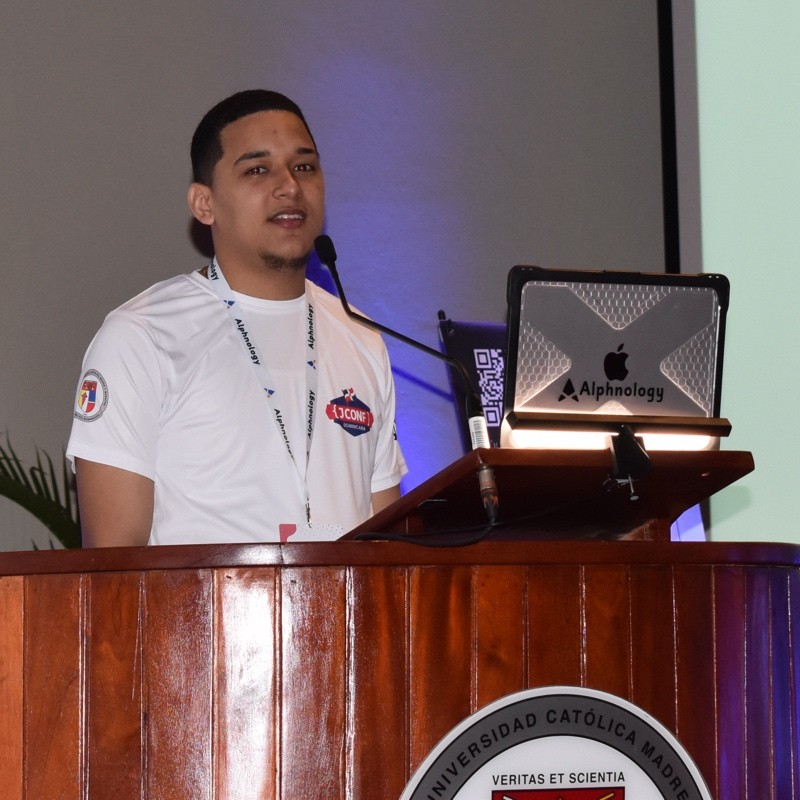
Brayan Muñoz V., an Oracle Ace Associate, is a Java SDE, Data Scientist, and Professor with an MSc in Data Science (UCJC) and a Telematics Engineer degree (PUCMM). He brings six years of software development experience, which includes three years in AI and data science projects, in monolithic and microservices architectures. He currently serves as a Professor and thesis advisor at PUCMM’s School of Computing and Telecommunications. Brayan is a Board Member of the Dominican Republic Java User Group (@JavaDominicano) and a winner of the JCP Program Awards Java in Education category with the group, frequently speaking on Java and AI/ML topics. He is also an open source enthusiast.