By Eclipse Foundation Team
“Everything I have is thanks to Java and open source”
When you meet Eudris Cabrera, one of today’s most active Latin American voices in the Java and open source world, you quickly notice – apart from the genuine enthusiasm he radiates – that his story is much bigger than code. It is about community, transformation, and the power of opportunity. A 2014 Linux Foundation Developer Do-Gooder Scholarship recipient, Jakarta EE Ambassador, contributor to numerous open source projects, and co-founder of the Dominican Republic Java User Group, Eudris has built a career grounded not only in technology, but in building bridges across communities. Let’s explore how a young student from the northern Dominican Republic became a Java Champion and a reference point for developers across Latin America.
Read also: Caribbean contributors: Fred Peña’s journey into Java and open source
Between softball and software
Eudris grew up in the northern region of the Dominican Republic, a place where baseball, community spirit, and music shape everyday life. He laughs when describing how deeply baseball is “inside of him.” So much so that he still plays softball on the weekends, balancing it with his other passion: dancing. Despite his busy schedule, the rhythms of merengue, bachata, and salsa music remain a vibrant part of his identity.
As with other developers from the Global South we’ve had the pleasure to meet, coding was never part of his early plans. When he entered university in the early 2000s, he aimed for a career in networking and telecommunications rather than software development. His first exposure to programming came through foundational modules in his degree: C, Java, Assembly, PHP, and SQL – languages used in network programming.

From technical to social networking
Yet, while he was making plans, life happened: After graduating and struggling for months to find work in networking, a friend encouraged him to apply for a Java and Linux role. The job paid modestly, but it gave him his first professional step into programming, and he never looked back. Networking would remain part of his life, though more social than technical, in his community work.
“Internet was a privilege”
Growing up in a small town where internet access was considered a privilege, Eudris understands firsthand how limited technological infrastructure can shape the trajectory of aspiring developers. Although this situation completely changed for him when he relocated to Santiago de los Caballeros to attend university, the scarcity experienced in his hometown partially explains his early fascination with Linux and open source.
The Dominican Republic’s limited early access to technology jobs also meant that many students, even talented ones, struggled to break into the industry.
“The top graduates had a higher probability of being hired, leaving many others behind. The pandemic has resulted in an increased demand for talent, creating more opportunities than before, but we must continue to narrow the gap,” he explains.
Cabrera has carried this awareness into every community initiative he leads.
Despite these barriers, the Dominican Republic has one powerful strength: its people. Their adaptability, strong English skills, and resilience make Dominican developers an asset worldwide. Organisations that hire in the region consistently return because of the quality, motivation, and strong results of Dominican talent.
Early challenges on the developer journey
Like many developers starting out, Eudris confronted two major obstacles:
Breaking into the job market
Entry-level roles were scarce; even excellent students found it difficult to get hired. Cabrera himself needed to take a leap of faith, leaving an underpaid job and trusting he could find another within weeks, something he managed to do in just two days.
Learning without guidance
Back then, Java had a notoriously steep learning curve. Without mentors or structured training, he relied heavily on self-study, progressively expanding from basic programming to software design, architecture, and best practices.
His early challenges fuelled his determination to help others, an impulse that later shaped much of his open source and community work.
Entering the open source and Java community
Eudris’ involvement in open source began organically. At university, he was inspired by talks about free software philosophy, especially after free software pioneer Richard Stallman visited the city of Santiago, where he delivered a talk at UAPA (Universidad Abierta para Adultos). This moment resonated widely, even though Eudris was unable to attend due to an exam.
In addition, he recalls that quite a few people approached him back then because they knew that he programmed in Java, and he was often asked, “I want to learn Java. How can I learn it?” With so few Java instructors available in the country, colleagues encouraged him by saying, “Why don’t you organise a Java course?” Eventually, he decided to do just that. For the first course, he and about fifteen colleagues rented a small space on a Saturday, where he taught Java – not as a professional instructor, but simply as someone willing to share his knowledge.
He also mentions that the Fundación Codigo Libre, led by Antonio Perpiñan in Santiago de los Caballeros, helped spark his interest in sharing his knowledge about open source.
Later, colleagues prompted him to create a Google Group called “Let’s Rock Java,” where he shared resources and answered technical questions. This was his first community contribution.
He also remembers his first experiences teaching Linux at the university, starting in 2013.
In 2014, he received the Linux Foundation Developer Do-Gooder Scholarship for a project providing offline access to Wikipedia to pupils in his hometown, democratising access to knowledge in areas with limited connectivity. This recognition helped expand his visibility and commitment to open source values.
By 2014, he and Carlos Camacho also co-founded Java Dominicana (the Dominican Republic Java User Group), organising meetups, training sessions, and technical talks. They later collaborated with other Latin American communities, helping to create a regional ecosystem of Java events, including JConf Dominicana and its sister conferences in Colombia, Peru, Mexico, and Guatemala.
Opportunities that open source created
Open source transformed Eudris’ life, professionally and personally.
Career advancement
Through Java and open source work, he paid off his student loans sooner than expected and built a 20-year career, including more than a decade supporting financial systems within the Dominican Republic government, where much of the national financial infrastructure runs on Java and Jakarta EE.
Global networks
Open source connected him with developers across Latin America, Europe, and the United States, leading to collaborations such as JakartaOne Livestream Spanish, Jakarta EE Ambassadors, Latin American JUG initiatives – including JDK Fundamental Talks and the Zero to Hero Java Bootcamp.
Technical contributions: Becoming a Java Champion
His contributions span multiple open source projects, including: JSR 354 (Money & Currency API), Bean Validation, JBake, Microcks, WildFly, Astive Toolkit (ATK), and Dapr Java SDK.
These efforts, combined with his community leadership, culminated in one of his proudest achievements: being recognised as a Java Champion in 2024.
Why organisations should invest in developers from the Dominican Republic
According to Eudris, organisations seeking strong engineering talent should consider the Dominican Republic for several reasons:
Near-shore advantages
Dominican developers share highly compatible time zones with the United States, often only one hour ahead, supporting smooth collaboration.
Language capabilities
Most Dominican developers are bilingual or possess strong English comprehension, enabling them to work effectively with global teams.
Strong technical foundation
Many have a background in telecommunications, networking, or systems infrastructure, skills that complement software development.
Proven excellence
Companies that hire Dominican talent often expand recruitment in the region because of the consistently high performance of teams based there.
Encouraging more developers to join open source
For Eudris, one of the biggest challenges in Latin America is changing perceptions about open source. Many still associate it with “free software” as in cost-free, rather than as a collaborative model powered by community contributions.
“We like to consume, but we don’t like to contribute. It’s like you are not doing your homework,” he notes.
This is something he is keen to help change.
His advice to aspiring contributors:
1. Start small
Open source is not only about code. Documentation, translations, testing, event organisation, and knowledge sharing are equally valuable.
2. Learn in public
Every contribution, no matter how small, builds confidence and visibility.
3. Join a community
Whether a local JUG or an online group, community support accelerates learning.
4. Take advantage of the global stage
Open source provides opportunities that might not be available locally, from remote work to international speaking opportunities and mentorship.
As he says, “Everything I have is thanks to Java and open source.”
His story illustrates precisely why he encourages others to follow the same path.
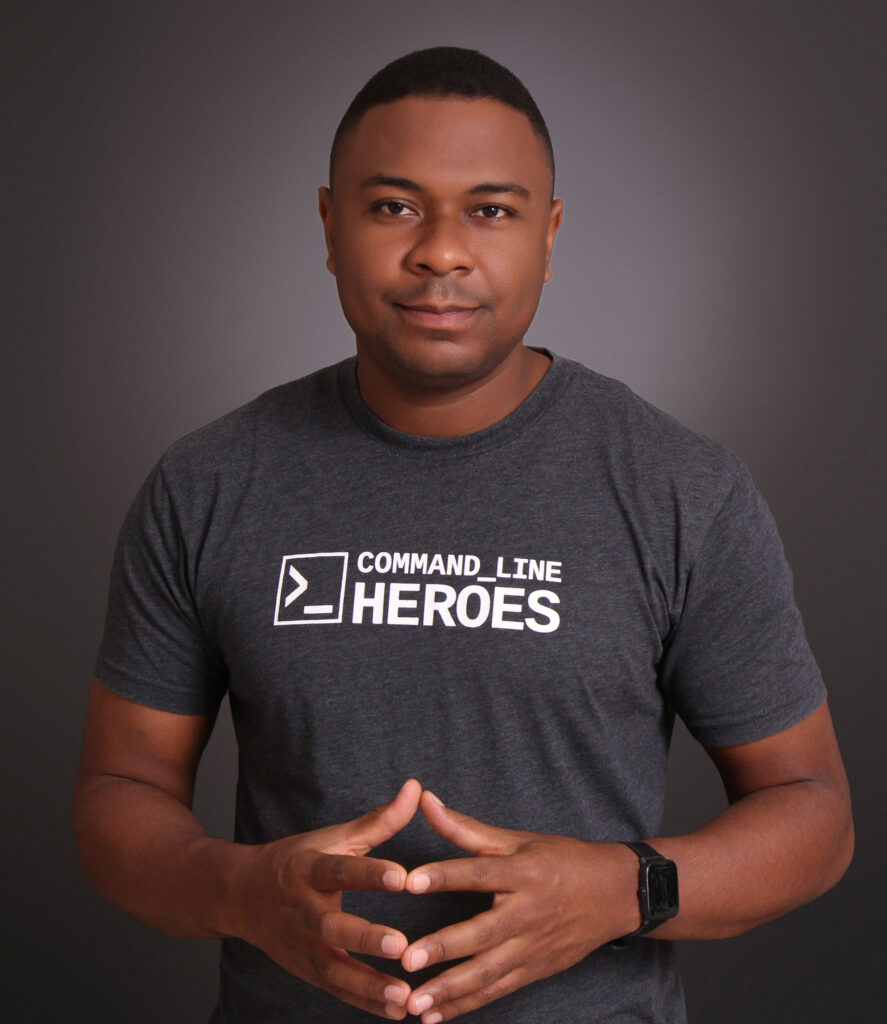
Eudris Cabrera is a telematics engineer, technologist, and open-source enthusiast with over two decades of experience in the Java ecosystem. He worked as a Software Developer at the Dominican Republic Ministry of Finance, supporting financial systems built on open source technologies before he joined Episode Six, a Financial Services company based in Austin, TX, in June 2024 as a software development engineer.
A committed advocate for education and community collaboration, he is a 2014 Linux Foundation Developer Do-Gooder Scholar, a Java Community Process Associate Member, co-founder of Java Dominicano, and an organiser of JConf Dominicana. He is also a Java and Linux trainer, a Jakarta EE Ambassador, and an active collaborator with Latin American JUGs.
Eudris has contributed to several open source projects, including Microcks, WildFly, JBake, JSR 354, the Dapr Java SDK, and the former Astive Toolkit. In his free time, he writes, speaks, reviews technical documentation, plays softball, and enjoys Latin dance.