

By Eclipse Foundation Team
“If you want people who go the extra mile, you will find them in Pakistan”
When Saad Bin Rafiq first encountered JavaScript in 2008, he didn’t yet know the word open source. What he did know was curiosity, and the feeling that a few lines of code could change everything. Growing up in Karachi, Pakistan, Saad initially entered the world of technology not through a university degree or formal training programme, but through observation, experimentation, and persistence. Today, he lives and works in Germany, contributing to open source ecosystems that span continents, such as Eclipse Tractus-X. Beyond an individual career path, his story also highlights the often overlooked realities of open source communities in the Global South.
Discovering programming: learning by doing
Saad’s first job was an internship as a research analyst shortly after finishing school. While the role itself failed to spark his interest, his surroundings did. Sitting near designers and developers, he became fascinated by how websites were built, and how HTML, CSS, and JavaScript could turn ideas into interactive experiences.
At the time, the web was evolving rapidly. Libraries like jQuery made front-end development feel almost magical, and Saad began experimenting on his own, teaching himself late at night using free online resources such as W3Schools. With limited access to mentors or modern infrastructure, self-learning became his primary path forward – a characteristic he shares with many other developers featured on this page (remember Jessie from Kampala, Uganda?).
“I didn’t plan a career in tech. I was just curious, and curiosity became everything,” he reflects.
Within two years, Saad had transitioned from design to front-end development, gradually building confidence, skill, and independence.
Freelancing in Pakistan: A parallel career path
In Pakistan, freelancing is a defining feature of the tech ecosystem. Many developers work full-time jobs while freelancing after working hours, not only for additional income, but to gain exposure to new technologies and real-world problems.
Saad followed the same path. He took part in crowdsourcing platforms, winning multiple competitions and learning how to deliver under pressure. Freelancing allowed him to experiment with content management systems like WordPress, Joomla, Drupal, Umbraco, and Sitecore, an experience that later became central to his career.
Pakistan is now one of the world’s largest exporters of freelance tech talent, despite limited resources and infrastructure. In November 2025, Pakistan had nearly 3 million freelancers, placing it among the top three nations leading freelancing, according to Pakistani news website GAD Insider. For many developers, freelancing is both an economic strategy and a learning environment.

Open source without the label
Although Saad formally encountered the term open source years later, he had already been contributing in practice.
In Pakistan, community contribution often takes the form of mentoring, free workshops, knowledge-sharing sessions, and volunteering in incubators such as those run by P@SHA (Pakistan Software Houses Association). Developers help others not for recognition, but because it strengthens the ecosystem.
“We were contributing all along. We just didn’t call it open source,” he says.
This cultural framing means open source is lived rather than named. Bug reports, shared tools, training sessions, and mentorship are common, even if contributors don’t identify themselves as part of a global open source movement.
Choosing open source – and being changed by it
Around 2018 and 2019, Saad began contributing more intentionally. He wrote technical blogs, engaged with international communities, and started speaking publicly. What initially puzzled him – why people would contribute without being paid – soon made sense.
In a recent interview, he remembers making his first code contribution to Sitecore in 2019, the first of a number of contributions which eventually led to him being recognised as a Sitecore MVP:
“Around 2019, I started working on a solution aimed at improving asset management within Sitecore. At that time, I noticed there was a missing feature. Recognising this gap, I decided to create a custom package that could automatically generate date-based packages of items, making it much easier for customers to synchronise environments and manage assets efficiently.
That project became my first real experience working deeply with Sitecore. I shared the solution publicly so other developers could benefit from it, and I received great feedback from the community. This experience of identifying a need, building a practical solution, and sharing it openly really planted the seed for my passion for open source collaboration and community-driven problem solving.”
But open source sharpened more than his technical skills. It improved his communication, confidence, and visibility. It also introduced him to mentors and collaborators around the world, fundamentally changing how he approached his career.
Relocating to Germany: opportunity through community
Saad’s move to Germany was not carefully planned. After COVID disrupted international hiring and delayed earlier plans to move to Dubai, he found himself freelancing remotely. A job posting shared by a friend in Germany caught his attention, and he applied.
His open source contributions, blogging, and community involvement helped him stand out in a competitive hiring process. Although visa requirements initially blocked the move, the company supported him, adjusted the contract, and hired him as a freelancer while the paperwork was resolved.
In October 2021, Saad relocated to Düsseldorf and began working in Germany.
“Open source didn’t just help me get the job. It helped people trust me,” he reflects.
Two work cultures, one perspective
Having worked extensively in both Pakistan and Germany, Saad sees clear cultural differences.
In Pakistan, workplaces tend to be informal and collaborative. Colleagues help each other spontaneously, humour is part of daily work, and the focus is on outcomes rather than schedules and meeting routines.
In Germany, work culture is more structured. Meetings are planned, boundaries are respected, and processes are clearly defined. While this brings efficiency, Saad sometimes misses the spontaneity and warmth of Pakistani offices.
Experiencing both cultures has made him more adaptable, and more empathetic.
Why companies should hire developers in Pakistan
For Saad, the case is clear: companies should hire developers in Pakistan not only because of cost efficiency, but because of their talent, adaptability, and problem-solving ability.
Pakistani developers are used to learning independently, working across multiple technologies, and taking ownership of their work. Many globally used products already rely on Pakistani engineers, often without public recognition.
“If you want people who go the extra mile, you will find them in Pakistan,” he says with a note of pride in his voice.
Hiring from Pakistan is not about outsourcing cheaply. It is about recognising and investing in global talent. In short: Hire Pakistani engineers – and talk about it!
Saad Bin Rafiq’s journey reminds us that open source is not defined by geography or titles. Often, it begins quietly: with curiosity, community, a willingness to share and learn, and with the ability to build bridges between worlds.
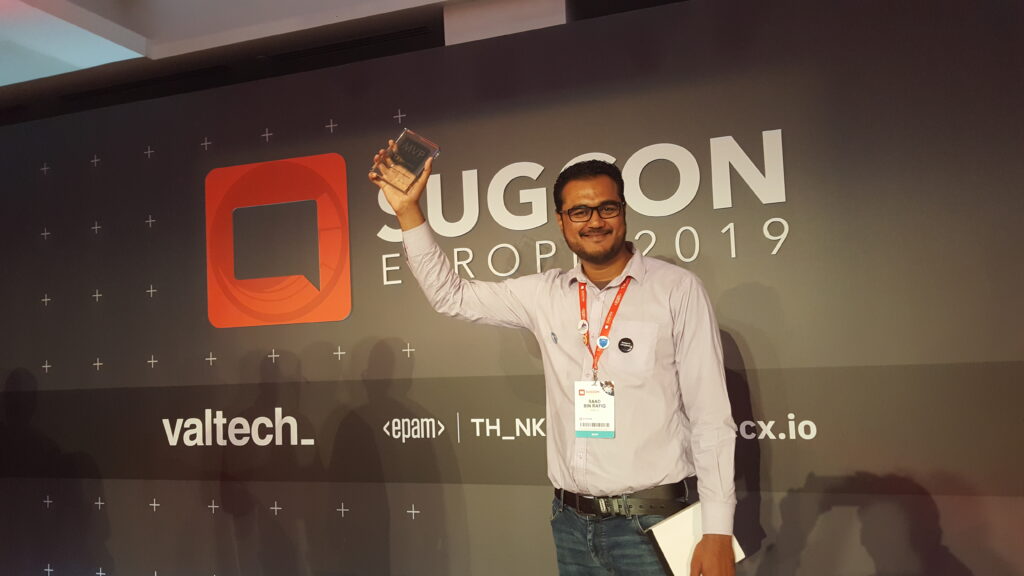
With over a decade of experience in web development, Saad specialises in developing modern, scalable, and user-centric frontend applications. His expertise includes React, TypeScript, JavaScript, .NET, and C#, with an emphasis on component architecture, performance optimisation, and responsive design. Saad has extensive experience in building and integrating complex web solutions while applying best practices in coding standards, version control, and CI/CD pipelines. Throughout his career, he has contributed to and led large-scale enterprise projects, collaborating with cross-functional teams to deliver seamless, high-performing digital experiences. Passionate about clean code, reusability, and continuous learning, he takes pride in creating efficient and high-quality applications that enhance performance and usability.