
How open source helped Miguel Useche find work, friends, and a place to call home
For Miguel Useche, open source has never been just about technology. Growing up in Venezuela, he discovered a global community that would shape his career, allow him to travel around the world, and help him build a new life in Colombia. His story shows how open source can create opportunities that extend far beyond software development.
Skateboarding and a Hollywood movie as sources of inspiration
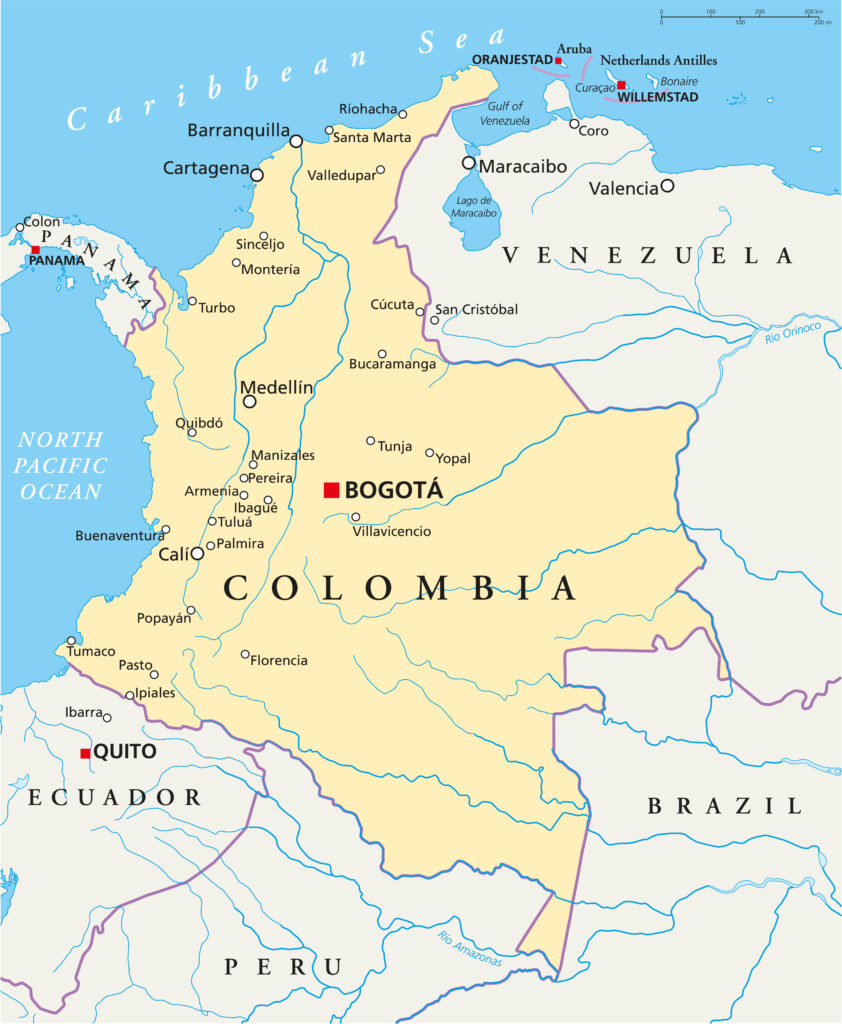
Miguel Useche grew up in San Cristóbal, a city in western Venezuela near the Colombian border. Although relatively small, San Cristóbal has a strong academic presence, with several universities and an active technology community.
His interest in computers began around the age of ten or eleven, when he watched the 1995 film Hackers. Until then, he had mainly associated computers with video games and office applications. The popular crime film opened his eyes to an entirely different world – with Hollywood living up to its reputation as the ‘dream factory.’
Fascinated by what computers could do, he began teaching himself programming around the year 2000. His father, who worked at a university, brought home computer science books and learning materials. Miguel started with BASIC before moving on to web development.
As a passionate skateboarder, one of his first projects was a website for the local skateboarding community. The website, https://puroskate.com, is still online today.
Around the same time, Miguel discovered Linux while exploring online communities. To his surprise, he found that people in his hometown were already using and promoting the operating system. He attended a local Linux community gathering and soon became actively involved.
His interest in programming eventually led him to study software engineering at a university in Venezuela. There, he encountered professors who were themselves active in open source communities and regularly organised events.
These experiences reinforced something he had discovered early on: software development was not just about writing code. It was also about connecting with people who shared his interests.
Connecting globally, contributing locally
One of Miguel’s most memorable experiences from his early days with Linux was discovering that people around the world were collaborating on software projects: During a Linux course at university, he met someone who ran an internet café and introduced him to online discussion channels. This is how Miguel began communicating with developers in other countries.
For a young developer in Venezuela in the early 2000s, this was extraordinary. He remembers e-meeting someone in Norway who was interested in exactly the same technology.
Even more fascinating was learning how developers who had never met in person could create software together, communicating primarily through email and online channels.
“This is more than just installing the software. It’s also like a big community behind that,” he recalls thinking.
At first, Miguel did not feel sufficiently confident in his programming skills to contribute code. Instead, he began translating software into Spanish, correcting mistakes, and helping organise community events.
He also helped promote open source projects, including Debian and Ubuntu, through installation events and, later, social media.
For Miguel, translation was particularly important. English proficiency remains a barrier for many developers and users in Venezuela and Colombia. Although he had exposed himself to the language from childhood, e.g. by watching cartoons in English, he recognised that many others did not have the same opportunity. By translating software and documentation, he could make open source technologies accessible to more people. He also learnt that translation alone was not always enough. Localisation matters because the same Spanish words can have different meanings in different Latin American countries.
These early contributions demonstrated that there were many ways to participate in open source, even without advanced programming skills.
Building the Mozilla community in Venezuela
Around 2010, a member of the Mozilla community in Colombia visited San Cristóbal and encouraged local developers to establish a Mozilla community in Venezuela. Miguel and several friends took up the idea and founded Mozilla Venezuela.
This marked an important milestone in his open source journey. Over the following years, he became increasingly involved in the Mozilla ecosystem and eventually joined the Mozilla Tech Speakers program, which supported community members in speaking at conferences.
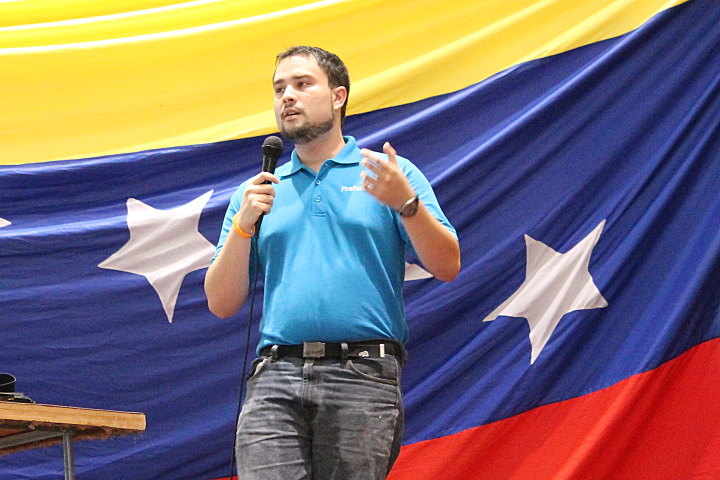
Through Mozilla, Miguel travelled to fourteen countries, attending community gatherings and speaking about open source, open technologies and web development. These experiences allowed him to meet developers from different cultures, exchange knowledge, and form lasting friendships. Some of those became so close that Miguel is now the godfather of a child whose father he met through open source.
For him, these personal connections are just as important as the professional opportunities. “More than the software, it’s about the people behind it,” he says.
More than 50% of employers asked about open source contributions
Open source also played a decisive role in Miguel’s professional development.
While studying software engineering, he chose to work on an open source-related university project involving phpPgAdmin, a web-based administration tool for PostgreSQL. Reading and understanding the source code of a real application transformed his understanding of software development. Concepts that had seemed abstract in university lectures suddenly made sense when he saw how experienced developers applied them in practice.
Open source also helped Miguel find his first freelance customer. After publishing an open source WordPress plugin, he was contacted by someone who wanted a modification. The initial request turned into additional paid work and eventually a long-term professional relationship. Miguel went on to work with that customer for approximately eight years.
His experience demonstrates how contributing to open source can serve as a practical demonstration of skills, helping developers establish professional relationships beyond their immediate surroundings.
He has also noticed a change in how employers value open source experience. During a recent job search, more than half of his interviewers asked whether he had contributed to open source projects. In earlier years, such questions were relatively rare, with only about one out of ten interviewers asking about open source experience.
Today, Miguel works for an AI company, primarily using Python and JavaScript to implement AI models. His career has evolved considerably since his first experiments with BASIC, but open source remains a constant.
Leaving Venezuela and starting a new life in Colombia
Despite his professional success, Miguel’s journey has not been without challenges.
For many years, working as a developer in Venezuela meant dealing with unreliable electricity, limited internet connectivity, and restricted access to modern hardware. In the early 2000s, equipment that developers in the United States could easily obtain was often unavailable locally. Universities also had fewer opportunities to collaborate with major technology companies. Although access to online learning resources improved the situation, everyday challenges remained.
Miguel remembers working remotely for a New York-based company with an internet connection of just one megabit per second. Power cuts could last for hours, making it difficult to maintain a reliable working environment.
In 2019, these problems eventually prompted him to move to neighbouring Colombia to continue his job. Although the two countries share many cultural similarities, relocating meant starting again in an unfamiliar city.
Once more, his open source connections made a difference. Through people he had previously met at JSConf, Miguel got in touch with the local developer community. They helped him understand everyday life in Colombia, navigate local procedures, and settle into his new surroundings. They also became his first friends in his new home.
Open source had already helped him find work and travel internationally. Now it was helping him build a new life in another country.
Two countries, different open source cultures
Having lived and worked in both Venezuela and Colombia, Miguel has observed some interesting differences between their technology communities.
In his experience, the Venezuelan open source movement was traditionally driven by universities, local enthusiasts, and a strong belief in the principles of free software. People participated because they enjoyed learning, sharing knowledge, and contributing to a common cause.
Colombia, by contrast, has a more business-oriented technology ecosystem, with greater involvement from companies and more opportunities to connect open source participation with professional development. Miguel was surprised by the number of large companies supporting local developer communities and organising meetups. He also believes that the economic and political situation in Venezuela has created additional challenges for open source contributors. When people must devote considerable time and energy to meeting basic needs, they have fewer resources available for voluntary activities.
Another challenge has been the politicisation of free software. Although the Venezuelan government promoted free software, Miguel recalls disagreements over the organisation and branding of community events. These sometimes created divisions within the movement. In his hometown of San Cristóbal, however, community members generally managed to put their differences aside and collaborate.
For Miguel, the ability to work together despite different perspectives has always been one of the strengths of open source.
Why companies should look to Latin America
Miguel believes that companies looking for software development talent should pay more attention to Venezuela, Colombia, and the wider Latin American region. Both countries have capable developers and universities producing highly skilled graduates, even if these institutions are not as internationally recognised as those in North America or Europe. Miguel, who has also taught at university, has seen this talent first-hand.
He points to the advantages of geographical proximity and overlapping working hours with companies in the United States and Canada.
But he also highlights another quality: resilience.
Having worked through power cuts, unreliable connectivity and limited access to equipment, many Venezuelan developers have learnt to adapt and find practical solutions. Miguel recalls an incident during a visit to a New York office when a power cut interrupted his colleagues’ work. While others struggled to continue, he simply kept programming on his laptop. Having previously dealt with unreliable infrastructure, he had learnt to keep a local working environment that did not depend on a continuous internet connection.
“I have the full company running on my laptop and I don’t need the internet to work,” he recalls explaining to his surprised colleagues.
For Miguel, such experiences demonstrate the resourcefulness that developers can develop when working under difficult conditions.
He also sees opportunities for open source to strengthen local economies. By building businesses and providing services based on open source technologies, developers can create jobs and support companies in their own countries without depending entirely on proprietary solutions from abroad.
For Miguel, staying in Latin America is also a personal choice. He values being close to his family and feels strongly connected to Latin American culture. He believes that developers who choose to remain in their home countries can contribute to their economic development while participating in the global technology industry.
Encouraging the next generation of contributors
When Miguel talks to young developers about open source, he encourages them to explore existing software, read its code and experiment with it. Access to real-world projects can accelerate learning in ways that traditional education alone cannot.
But he also emphasises that contributing to open source does not necessarily mean writing code. Translation, localisation, documentation, organising events and supporting communities are all valuable contributions. And the benefits go far beyond technical knowledge.
Through open source, developers can learn how to collaborate in teams, interact with people from different cultures, develop communication skills, and build international networks.
Miguel also sees new opportunities emerging through artificial intelligence, which can make it easier for beginners to contribute code. However, he cautions against submitting AI-generated contributions without properly understanding or reviewing them. His advice is to identify a genuine problem, discuss it with the project’s maintainers, and develop a solution that has been carefully tested and validated. He worries that open source projects are increasingly receiving AI-generated code and feature proposals that do not meet the necessary quality standards. AI can help developers contribute, but it should not replace their responsibility for the work they submit.
Ultimately, Miguel’s message to aspiring contributors is simple: start exploring, find a community, and get involved.
His own journey began with a movie, a few programming books and a local Linux user group in Venezuela. It led to an international career, visits to fourteen countries, lifelong friendships, and a new home in Colombia.
Miguel is a software engineer, open source advocate, and hobbyist skateboarder who has spent decades contributing to open source communities through code, translations, articles, talks, and event organising. He helped establish several free software communities in Venezuela and previously organised the country’s longest-running WordPress meetup. He has also taught Operating Systems and Programming at the Universidad del Táchira. Involved with Mozilla since 2010, including as a Mozilla TechSpeaker, Miguel is passionate about sharing emerging open technologies and empowering others to build better technologies for the future.