
Friday, November 14, 2025 – by Eclipse Foundation Team
“The future of African technology will be built on open source”
From his first baby steps in digital design in his father’s print shop to shaping digital transformation in The Gambia, Olawale Fabiyi’s story traces the evolution of a self-taught programmer who turned limited access into limitless opportunity. Bridging continents, communities, and generations, he has become a leading voice for open source in Africa. Learn what he has to say about championing open source collaboration, inclusion, and innovation as the cornerstones of the continent’s digital future. A lifelong curiosity that began by chance.
For Olawale Fabiyi, technology wasn’t part of the original plan. Growing up in Lagos, Nigeria, he dreamt of becoming a doctor, or perhaps an engineer. But when university admissions proved too competitive, life steered him in another direction.
“My dad owned a printing and publishing business,” he recalls. “They started a small computer department for graphics, and I’d sit there during the day watching them work. At night, I’d practise on their PC. That was how I got my first glimpse into what tech could be.”
That curiosity became a lifelong passion and pursuit. In 2002, Olawale enrolled at Yaba College of Technology, Lagos, to study computer science, where he was taught the older programming languages BASIC, COBOL, FORTRAN, and Assembly. “It wasn’t until the final semester that we did a bit of Java,” he recalls. His first glimpse into code in a project was when he joined the team building the Miss Unilag website, designing the graphics components in 2003. His first coding project, an online student registration and results checker as his final year project, was built using ColdFusion Markup Language in 2005 using only CDs for learning material.
“There was no internet, no ChatGPT to help you out. Just me and my Macromedia CD,” he laughs.
A move to Malaysia followed in the same year, where he completed his bachelor’s degree in Computing at UCSI University, earned an MBA, and began working as a software developer. In 2012, he returned to West Africa, first to Nigeria and later (in 2014) to The Gambia, where his story took a new turn: Starting that year, he managed the IT department and coordinated the computer science program at the American International University West Africa in The Gambia. This role also marked the beginning of his involvement in open source.
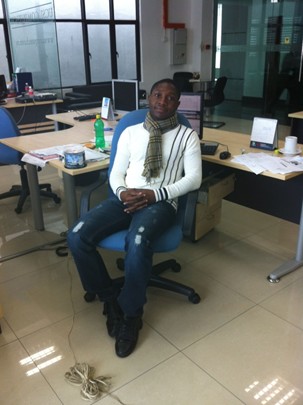
Combining experiences from two continents
“Each environment has influenced me differently,” says Olawale. “Lagos built my foundation. Malaysia gave me formal computing education, and The Gambia gave me space to build communities and experiment with open source.”
As one of Africa’s largest and most vibrant tech hubs, Lagos taught him the transformative power of innovation. In Malaysia, he discovered the discipline of structured software engineering. And in The Gambia, affectionately known as the Smiling Coast of Africa, he found purpose in merging education with community development, and academia with industry needs.
Today, Olawale serves as Technical Advisor to the Ministry of Higher Education, Research, Science and Technology in The Gambia, overseeing a project funded by the World Bank called HEMIS, which focuses on digital transformation in education.
“I’m still in academia,” he explains, “just on the other side, shaping systems and policies that will define how education and technology intersect in West Africa.”
Learning to code in the early 2000s was no easy task.
“It was so hard,” he admits. “There was limited internet, and resources were scarce. But those struggles built resilience and adaptability.”
That persistence paid off, leading him across continents, industries, and institutions. Working in environments with limited infrastructure made him creative, teaching him to achieve more with fewer resources.
Finding purpose through open source
At first, Olawale didn’t believe in open source. “I used to think open source wasn’t professional enough because I was surrounded by proprietary tools,” he admits.
His perspective changed dramatically when he became Coordinator of the Computer Science Department at the American International University in The Gambia. The challenge of expensive software licences prompted him to explore open source alternatives, and it soon became a passion.
That passion led to the creation of the Open Source Academy, an affiliate of the Open Source Initiative (OSI). Its mission: to bring open source adoption to higher education in The Gambia. The Python Software Foundation backed its launch, confirming the initiative’s potential.
“Open source isn’t just about code. It’s about philosophy, community, and inclusion,” he says.
But Olawale didn’t stop there. He later founded HackWeakEnd, a social impact programme designed to solve real societal problems through technology, also leveraging open source software. The name plays on “hack weekend” and “weak ends”, representing the issues that need fixing.
HackWeakEnd hosted hackathons and events across health, education, fisheries, hospitality, and agriculture – several of which led to startups like G-Quiz, an education app helping secondary school students, an AI chatbot developed during the COVID-19 pandemic by The Webway, and BayKart, a recently launched agritech platform which had its root in one of the hackathons.
“Open source changed everything,” Olawale says.
It allowed him to connect academia with industry, empower students, and nurture home-grown innovation.
Through his initiatives, he helped create pathways for students and young developers to work on real-world projects, gain visibility, and collaborate globally. Today, he continues to advocate for open source through speaking engagements, mentorship, and participation in events like the 2025 Open Source Congress in Brussels, organised by the Eclipse Foundation.
Olawale also highlights the importance of thoughtful regulation in the open source space. He emphasises that inclusion must be central to any policy discussions, particularly as the European Commission explores new frameworks for open source adoption and governance and he is hopeful that the African Union Commission will follow this same trajectory. “You cannot love me the way you want to love me – you have to love me the way I want to be loved,” he says, underscoring the need for regulators to work with developers and contributors, not merely legislate for them. For Olawale, effective regulation means bringing those who build and use open technologies into the policymaking process, ensuring that the resulting frameworks reflect the realities and aspirations of the global open source community.
He concludes:
“Through open source, I found a way to merge education, community, and innovation. It gave me opportunities I would never have had otherwise.”
With conviction, he adds: “I believe the future of African technology will be built on open source foundations.”
Nigeria’s first unicorns: Why the world should look to West Africa
According to Olawale, the case for investing in African developers is clear.
“West Africa is building world-class products in fintech, agritech, and edtech,” he says. “There are several unicorn startups.”
He points to Paystack, the Nigerian fintech acquired by Stripe for over $200 million, as proof of the region’s innovation potential.
“The Gambia is just five hours from Europe and shares almost the same time zone,” he notes. “It’s an English-speaking country with a young, educated workforce and a growing tech ecosystem.”
He encourages global organisations to move beyond outsourcing. “Don’t just hire African developers. Establish a presence here. Invest in the ecosystem. The talent is massive, and we build for impact, not just profit.”
And indeed, what could align more closely with the United Nations’ Sustainable Development Goals than investing in African communities and startups that are actively addressing social and environmental challenges?
Inspiring the next generation of open source developers in Africa and beyond
When asked how to inspire others to follow in his footsteps, Olawale doesn’t hesitate.
“Start with community,” he says. “True to the saying: if you walk alone, you’ll go fast; if you walk together, you’ll go far.”
He recommends joining developer communities and events such as OSCAFest (OSCA = Open Source Community Africa) and DevFest Banjul (GDG Banju), both of which connect developers across the region. “These events are gateways into the broader open source ecosystem.”
He also advises young developers to start small – contribute documentation, fix bugs, or review code. “You don’t have to build the next Linux kernel to make an impact,” he smiles.
“The most professional, cutting-edge technologies in the world are built on open source,” he adds. “And open source is not just code. It requires communities, organisers, speakers, advocates, technical writers, and community managers.”
Thus, everyone has the opportunity to get involved according to their individual strengths.
For Olawale, the mission is clear: build local solutions with global tools, and make open source a foundation for Africa’s technological future.
“The sooner we embrace it,” he concludes, “the faster we’ll close the gap – and start leading innovation globally.”

Olawale Fabiyi is a technology architect and digital transformation specialist – with roots in software development – as well as an educator and open source advocate, originally from Lagos, Nigeria, now based in The Gambia. He serves as Technical Advisor to the Ministry of Higher Education, Research, Science and Technology, overseeing the World Bank–funded digital transformation of the ministry’s operations and the national higher education system. Olawale is also the founder of the Open Source Academy and HackWeakEnd, initiatives dedicated to expanding open-source adoption and addressing societal challenges through technology.