
by Eclipse Foundation staff
From curiosity to career, from career to community
For Didas Mbarushimana, open source is a way to learn, connect, and create opportunities internationally – not only for himself, but for a growing community of developers across East Africa. His journey has taken him from the Democratic Republic of Congo to Kenya, South Africa, Rwanda, and other countries across Africa. Along the way, he taught himself to program, found mentors and collaborators, contributed to open source projects, and built communities to help others follow a similar path.
Discovering software and open source thanks to family, friends, and teachers
“People are interested in open source because they see what we are doing. They are following our movement,” Didas says, pride evident in his voice. For the young man who has helped shape open source communities across three East African countries – and experienced the challenges of crossing physical borders, learning new languages, and adapting to new environments – the borderless nature of open source offers both a powerful opportunity and a unifying force.
Didas was born in the Democratic Republic of Congo. He spent his childhood in Goma in the North Kivu province and Kolwezi in the former Katanga province in the south of the country, where he continued secondary school and later attended university. After losing his mother in 2006 and his father in 2011, he moved to Katanga to continue his education, where he completed secondary school and later attended university.
His introduction to software began almost by chance. During a school holiday, an aunt encouraged him to take a course in Microsoft Word, Excel, and PowerPoint. It was his first real encounter with a computer, and it immediately made him curious about what was happening behind the screen.
At around 14, in 2011, Didas began exploring software development through online tutorials. He studied algorithms and data structures independently, driven by a desire to understand how technology and software worked. At university, he chose networks and telecommunications rather than computer science or software engineering, but his interest in coding never faded. After graduating in 2021, he decided to pursue software development in earnest.
Developing those skills in Congo was not easy. In some parts of the country, reliable electricity and internet access were difficult to come by, and there were few events or opportunities to meet experienced developers. Talent was present, Didas says, but infrastructure, active technology communities, and international connections were much harder to find.
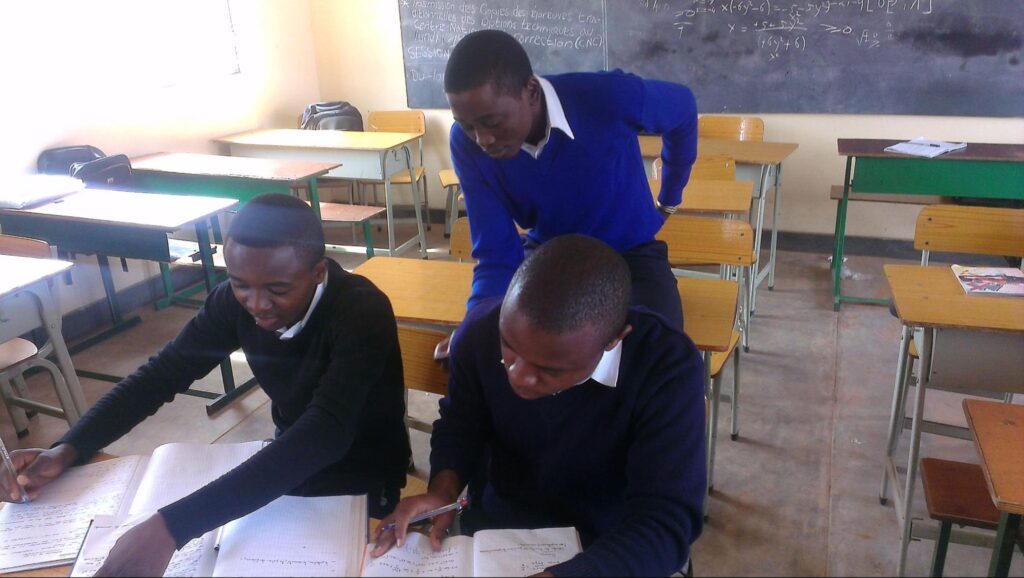
One person made a decisive difference. At university, Didas became friends with Henry Kamangu, and their teacher, Elie Kime, began mentoring them both. He shared projects and tutorials and helped guide their early development journey. That experience would later inspire Didas to support others in the same way.
School had also given him an early introduction to open source. Fortunately, his school in Congo offered computer science as a subject – something that is still not taught in every European school. In class, students were assigned different technologies to research and present. Didas’s group was asked to explore Ubuntu. Through that assignment, he discovered not only the Linux distribution but the broader idea of open source. He also came across Java and the Eclipse IDE during those years.
Open source was therefore part of Didas’s learning long before it became the focus of his career and community work.
Five thousand kilometres towards opportunity
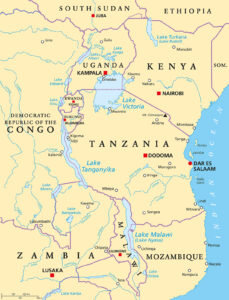
After university, Didas found that his environment offered few of the connections or software jobs he was seeking. With financial help from a family member, he decided to relocate to Kenya. The roughly 5,000-kilometre journey from Lubumbashi took about a week and involved travelling by bus and motorcycle.
Six months after his arrival, the financial support unexpectedly ended. Didas had to support himself, search for work, and find a way forward in a new country. Yet it was during this difficult period that his prospects began to change.
He joined developer groups on WhatsApp and connected with people who introduced him to others in the technology ecosystem. Kenya’s active community made a strong impression: developers attended events, contributed to projects, and helped one another make connections. For Didas, it demonstrated what becomes possible when technical talent is supported by an engaged network.
“It was in Kenya where things changed for me,” he recalls.
Taking Kenya’s community spirit to Rwanda
Kenya inspired Didas to explore how developers in Rwanda could benefit from the same community energy. With family roots in the country and plans to move there, he began building a WhatsApp group while he was still living in Kenya.
Initially called “React.JS Rwanda,” the group grew through persistent, personal outreach. Didas used LinkedIn to find developers in Rwanda and invited them to join. New members brought in others, and the informal group gradually developed into a serious community.
At the time, Didas felt that existing developer communities in Rwanda were not especially active. His new network gave people a place to exchange knowledge, work together, and learn how to contribute to projects. Although React was the initial focus, discussions soon extended to Python and open source more broadly.
The initiative eventually attracted the attention of someone connected to Rwanda’s technology ministry, who approached Didas about collaborating and encouraged him to relocate from Kenya. Once in Rwanda, the work gained momentum. The community organised workshops and hackathons and placed a growing emphasis on open source as a route to skills, employment and international connections.
That effort developed into Open Source Kigali, a community focused on empowering Rwandan developers to participate in open source and contribute to locally relevant projects.
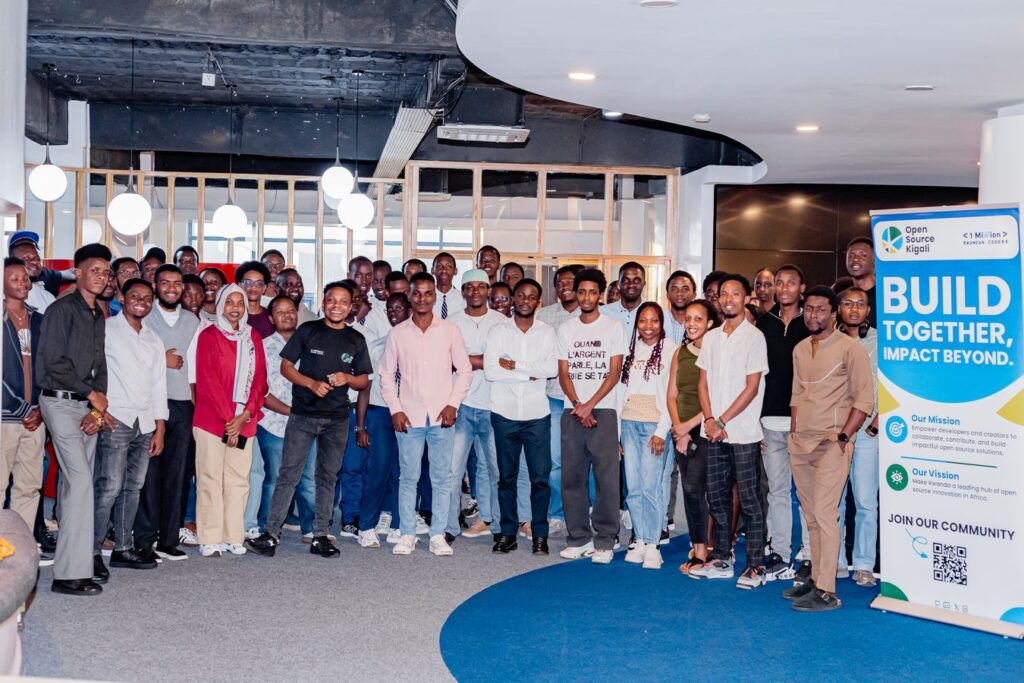
The Open Source Kigali community (credit: Open Source Kigali)
Turning community into a movement
Didas’s work as a community organiser is rooted in his own experience. He knows how much difference a mentor, an introduction or an active peer network can make when formal opportunities are limited. Through Open Source Kigali, he wants to give developers access to the support that helped him move forward.
The community encourages people not only to use open source software but to contribute to it. Workshops, hackathons, and online exchanges help participants find projects, practise collaboration and make their work visible. Didas has also spoken about open source beyond Rwanda, including at Google Developer Group events in the Democratic Republic of Congo (e.g. in Bukavu, Goma, and Lubumbashi), as well as in Malawi, Nairobi, and other places. He sees growing interest in open source across East Africa and hopes that similar initiatives will help connect communities throughout the region.
Although Didas appears to be involved in many activities, he stresses that community building is never the work of one person. Open Source Kigali distributes responsibilities across content, partnerships, technology, and other teams.
“When you create a community, you cannot do everything yourself,” he says. “You need to bring people together and delegate tasks so that you can move faster.”
His role is therefore not simply to organise events, but to create structures in which other people can assume responsibility, share knowledge, and develop into community leaders themselves.
When contributions open career doors
Didas is candid about why many young African developers first become interested in open source: they are looking for opportunity. Their immediate goal may be to find work, develop practical skills, or meet people who can help them progress. Those motivations do not diminish the value of contribution. Instead, they show how powerfully open source can connect individual ambition with collaborative work.
For Didas, contributing offers something that conventional training alone cannot provide. A course or boot camp can teach concepts, but open source gives developers the opportunity to practise in real projects, work with experienced contributors, and receive feedback. Their contributions also form a public record of what they can do.
His own technical path was shaped as much by practical necessity as by careful planning. Having built a foundation in algorithms and data structures, he learnt new languages and frameworks when freelance projects required them. If an opportunity called for Python, he learnt Python. If delivering a project required help, he found people with whom he could work and learn.
Over time, he became active in the Python and Django communities as well as the React ecosystem. A memorable milestone was having his first Django pull request accepted. Today, his work is focused mainly on React, reflecting the needs of his current projects, while his broader experience continues to inform his community work.
Open source also introduced him to people across the Python, Django and React ecosystems whom he might never otherwise have met. These relationships brought freelance work, speaking invitations, and opportunities to travel, including participation in PyCon Africa in Uganda.
The opportunities often come from outside Rwanda. For Didas, this illustrates both the strength of open source and a persistent challenge for local ecosystems: global communities can recognise talent regardless of location, but local markets do not always create enough opportunities for the people developing that talent.
Digital autonomy done right: building solutions locally
Rwanda’s enthusiasm for locally developed technology is particularly encouraging to Didas. Rather than relying exclusively on platforms operated by major US technology companies, Rwandan developers are creating services for their own communities.
One example is Vuba Vuba, a locally developed food-delivery platform that provides an alternative to services such as Uber Eats. For Didas, its importance goes beyond convenience. When people use locally built services, technical knowledge, economic value, and the ability to shape the platform remain closer to the communities the technology serves.
This approach contributes to digital autonomy: the capacity to make independent choices about the technologies on which public life, businesses and everyday services depend. It does not mean excluding international products. Didas emphasises that global platforms are welcome. The difference is that Rwanda is also developing credible local alternatives rather than treating dependence on foreign technology as inevitable.
Open source can strengthen this model. It gives local developers the ability to study and improve technology instead of relying entirely on systems they cannot inspect or influence. It can also turn a local project into a shared endeavour, allowing contributors to build skills while improving a service designed around regional needs.
Didas sees public support as an important part of Rwanda’s progress. When local developers propose promising open source projects, government involvement can help attract contributors, expand visibility and turn an idea into a widely used service. Reliable electricity and connectivity provide the essential foundation on which such communities and products can grow.
A language divide in African tech
Didas’s journey also reveals a divide between English- and French-speaking technology ecosystems in Africa. The distinction is not about talent. He sees strong technical potential in Congo, Kenya and Rwanda alike. The difference lies in access to communities, information, and international networks.
Much of the global technology and open source world operates in English.
Documentation, events, and everyday project discussions are often conducted in the language. Developers in English-speaking countries such as Kenya therefore have more immediate access to many international conversations. Didas found Kenya’s ecosystem particularly active and well connected, with numerous events and communities through which developers could meet one another.
In predominantly French-speaking Congo, talented developers can encounter an additional barrier. They may have fewer opportunities to join international networks, and relevant English-language resources can be less accessible. This does not prevent participation, but it can make the route into global projects longer and more difficult.
Rwanda occupies a distinctive position between these linguistic spheres. English became one of Rwanda’s official languages in 1996, alongside Kinyarwanda and French. Introduced as the principal language of education in 2008, English has gained importance, while Kinyarwanda remains the language most widely shared across the population. Today, Kinyarwanda, Swahili, English, and French are the country’s official languages. Younger developers are increasingly entering English-speaking technology communities, although their levels of English vary.
Didas’s own experience spans several languages. He grew up speaking Swahili and French, also speaks Lingala and has developed his English through his work and international connections. Moving from Congo through Kenya to Rwanda gave him access to a wider English-speaking ecosystem, an opportunity he believes might have been harder to find had he remained in Congo.
Closing this divide will require more than telling developers to learn English. Stronger local communities, multilingual resources and links between French- and English-speaking contributors can ensure that language does not determine who gets to participate. Didas’s work is already helping to build some of those bridges.
Making the path wider for those who follow
Didas’s experience shows why access to open source matters. It cannot remove every barrier. Contributors still need time, electricity, connectivity, and the financial space to participate. Didas is careful to recognise those realities, particularly for graduates under pressure to find paid work quickly. But where participation is possible, open source can make geography less decisive – and less divisive. It offers a place to practise, a body of work others can see, and a global network built around collaboration.
For Didas, the journey from Congo to Kenya and Rwanda has transformed curiosity into a career, and a career into a community. The next chapter is about ensuring that more developers across Africa can embark on the same journey without having to make it alone.
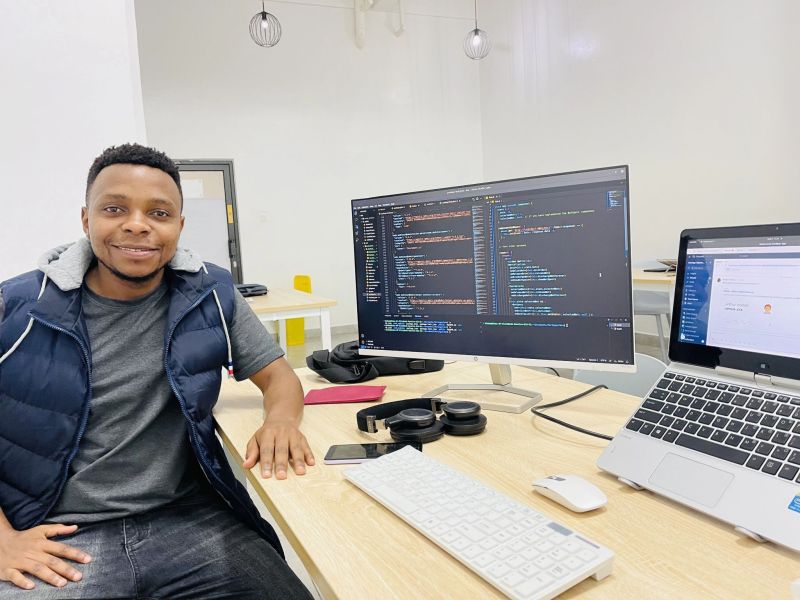
Didas is a full-stack software engineer passionate about innovation and building robust solutions that make a meaningful difference. With expertise in React.js, TypeScript, Node.js, Django, and PostgreSQL, he has led several projects as a lead developer, focusing on agile development practices, application performance, and security. His interest in artificial intelligence and technological innovation drives him to continually learn and incorporate emerging trends into cutting-edge solutions. He is also a strong advocate for coding best practices and efficient development processes.
Fluent in English, French, and Swahili, Didas is comfortable working in multinational and multicultural environments. Currently based in Kenya, he travels across Africa to explore new opportunities and connect with passionate technology communities.
His goal is to contribute to innovative projects, collaborate with ambitious teams, and advance technology while delivering tangible results.