
By Eclipse Foundation Team
Fon Emmanuel Noel Nfebe’s story
In the growing constellation of Global South contributors shaping today’s open source ecosystem, Fon Emmanuel Noel Nfebe stands out as a hands-on builder, a humble mentor, and a quietly persistent innovator. His journey – from his childhood in Cameroon to contributing to globally used platforms like Nextcloud – offers a compelling glimpse into how skills, opportunity, and community intersect, and reinforce each other.
Growing up in Bamenda
Fon grew up in Bamenda, a city in Cameroon’s northwest region, an area that has in recent years been affected by socio-political crisis. Despite these challenges, his early life was grounded in education. He completed his primary, secondary and high school studies there before moving to university in the country’s anglophone southwest region.
His higher education took place at the University of Buea (often associated with the “Silicon Mountain” tech ecosystem), where he studied computer engineering at the College of Technology (COT). This environment would later prove pivotal – not just academically, but culturally – in shaping his path into technology and open source.
Discovering technology, almost by accident
Interestingly, software development was not Fon’s original ambition. Like many students and some of the Global South contributors we spotlight on this page, he initially considered a career in medicine. His entry into computing came through a more informal route: a holiday computer training course his mother encouraged him to attend.
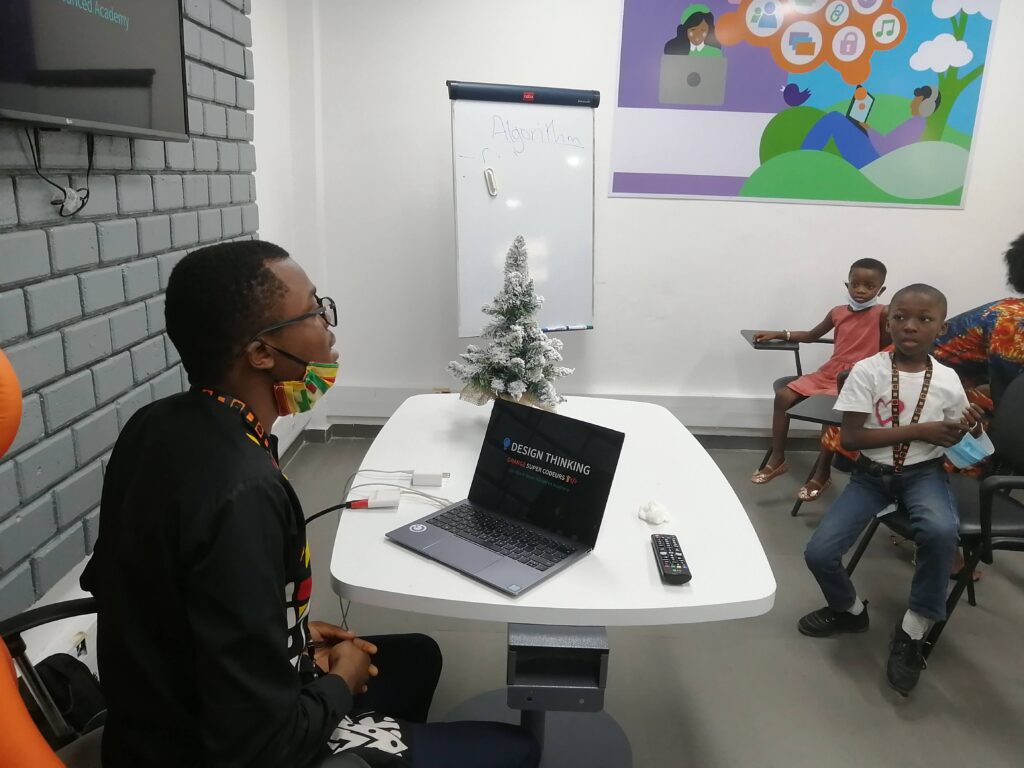
There, he learned basic skills, using Microsoft Word, designing simple graphics, even dismantling computers. What began as a practical exercise quickly became a fascination. He started experimenting on his own, attempting to build computers and explore how they worked.
A turning point came in secondary school when Cameroon introduced computer science as a subject. Under the guidance of an inspiring teacher, Mr. Ngala Ferdinand, Fon discovered both aptitude and enjoyment in programming, eventually achieving top grades and helping his school become one of the best-performing in the country in the subject.
First encounters with open source and the “Silicon Mountain”
Fon’s introduction to open source was not through software itself, but through people.
A group of students from the University of Buea visited his school to promote programs like Google Summer of Code (GSoC). They presented open source as an opportunity to work on real-world projects, collaborate globally and even earn income. That message resonated deeply.
Motivated by this exposure, Fon chose to attend university in Buea specifically to immerse himself in this ecosystem. There, he applied to GSoC multiple times, facing rejection before eventually succeeding twice. Those experiences marked his true entry into open source development.

Building a career through open source
Fon’s GSoC projects ranged from improving collaboration platforms for women in tech to working on continuous integration systems for educational software. These experiences were transformative, not only technically, but professionally.
They helped him:
- Gain financial independence as a student
- Build a portfolio of real-world contributions
- Secure early employment opportunities
After graduating, he began teaching web development before moving into fully open source-driven roles. His career path included:
- Work on privacy-focused cloud tools supported by organisations such as Internews
- Consulting with Open Tech Strategies
- Ongoing contributions to Nextcloud, a globally used open source cloud platform
At Nextcloud, his work has reached an enormous scale, contributing to software used across hundreds of thousands of servers worldwide.
Founding businesses around open source
Fon did not stop at contributing. He began building.
In 2022, he founded a small consultancy (WhileSmart) in Cameroon, assembling a team of developers working part-time on both client projects and open source tools.
From this foundation emerged several open source products:
- Trakli – a privacy-focused personal finance tracker with mobile and web apps
- SourceAnt – an AI-powered, self-hostable code review assistant
- Flatrun – a platform for managing containerised deployments
His philosophy is clear:
“Open source should remain truly open, with monetisation built around services or added value, not locked features.”
For example, Trakli remains fully free when self-hosted, while optional hosted features may be monetised. Similarly, Flatrun explores a marketplace model rather than restricting its core functionality.
This approach reflects a broader tension in modern open source: balancing sustainability with openness.
Challenges in the open source journey
Fon speaks candidly about the difficulties of working in open source today.
Sustainability and funding
Many projects depend heavily on a small core team, often unpaid or underfunded. Maintaining momentum, paying contributors and ensuring long-term viability remains a constant struggle.
Visibility and distribution
Building software is only half the battle. Getting people to discover and trust it, especially in an era saturated with AI-generated projects, is increasingly difficult.
Licence changes and trust
Fon highlights frustration with projects that shift from open source to proprietary models, eroding community trust.
The double-edged sword of AI
AI tools can dramatically improve productivity (e.g. automated code reviews), but also raise concerns about misuse, code ownership and quality dilution.
Highlights and impact
Despite these challenges, the rewards are significant.
Fon describes the greatest highlight as seeing people use what he builds:
- Educational tools improving student and teacher workflows
- Contributions to large-scale platforms like Nextcloud reaching millions
- Open source packages being adopted by developers worldwide
There is also a deeper sense of continuity: His own journey was enabled by others, teachers, mentors, programs like GSoC, and he now seeks to extend that chain by building tools and communities for the next generation.
A Global South perspective
Fon’s story underscores the importance of local ecosystems like Cameroon’s “Silicon Mountain.” Access to mentorship, exposure, and community proved just as critical as formal education.
It also highlights a broader truth: open source is not just about code. It is about access, opportunity, and participation across borders.
Looking ahead
Fon is exploring ways to make his projects more sustainable: through funding, community growth, and potentially collaboration with foundations such as NLnet or others.
But his guiding principle remains consistent: build openly, share widely and ensure that what is created can outlive its creator.
In many ways, Fon’s journey – from Bamenda to the global stage – mirrors the ethos of open source itself: iterative, community-driven, and shaped by persistence. His work is a reminder that innovation is everywhere, and that the future of open source will increasingly be written by voices from the Global South.
Fon is a software engineer and automations expert with more than seven years of experience designing, building, and operating production systems across the full stack. He works with PHP, Python, Go, and JavaScript/TypeScript – from Docker-native infrastructure and CI/CD pipelines to enterprise collaboration platforms and consumer web apps. He has made more than 3,000 open source contributions in the last twelve months.