by Eclipse Foundation staff
María’s open source love story between Venezuela and Colombia
“Curiosity is the key to a happy life.” It’s a message María shares at the end of every talk she gives, and one that perfectly sums up her own journey through more than two decades in open source. Today, María is still bubbling with creativity, wit, and enthusiasm when she talks about open source. In her case, open source is a love story. And quite literally so, as it’s where she met her partner. Her journey shows that contributing to open source is not only about writing code, and that curiosity, creativity, and human connections can open doors you never expected.
When María first encountered open source in Venezuela in 2001, she was studying programming at university. But while her fellow students were focused on making their code work, she found herself drawn to something else entirely.
“Every time I was working on a class assignment or homework, I always ended up more excited about making it cute than actually functional,” she recalls.
It didn’t take long for fellow students to notice. They weren’t particularly impressed with her coding skills, but they recognised her talent for making software more visually appealing.
That feedback would change the course of her career. Instead of becoming a programmer, María found her calling in graphic design, communication, and community building, fields that continue to be overlooked by potential open source contributors even today.
More than 25 years later, she has built an international career, met her husband through the Fedora community, and developed friendships that have lasted decades. And she has never had to submit a CV to get a job.
Design is the connection between technology and its users
In the early 2000s, open source software wasn’t exactly known for its visual appeal. Projects were often driven by developers, with little attention paid to design or user experience.
For María, this represented both a challenge and an opportunity.
At the time, there were no university programs in Venezuela that would allow her to pursue graphic design using open source tools such as GIMP or Inkscape instead of proprietary alternatives. She eventually decided to leave university and build her career through practical experience.
It wasn’t always an easy decision, particularly when some people questioned whether design was a worthwhile contribution to open source.
“I remember people telling me, not in a good way, ‘So you changed the real stuff for just making graphics and stupid designs.’”
Her response was straightforward: “Your code can be the best in the world. But if it doesn’t look good, nobody’s going to buy it. So you need me.”
Over the years, this became a recurring message in her conference talks and workshops. Design, she argues, isn’t just about aesthetics. It’s the connection between technology and the people who use it.
“If it’s not easy to understand, if it’s not easy to read, to learn, then you can have the best piece of software that nobody’s going to use.”
The same principle applies to building open source communities. Without effective communication, attractive materials, and an accessible user experience, even the most innovative projects can struggle to reach new contributors.
For María, design and communication are therefore not secondary activities, but essential elements of a successful open source ecosystem.
“It’s not just about the software. It’s about all the structure that actually allows you to gather the people that are going to build the software.”
Finding her niche – and love – in open source
María’s first contributions were not design projects, but translations: in the early 2000s, Spanish-language resources for open source software were scarce. Documentation, tutorials, and websites were overwhelmingly available in English, creating significant barriers for people across Latin America.
She began translating materials and soon found herself creating flyers, banners, and other promotional assets for community events. What started as a way to make information accessible to Spanish-speaking audiences gradually developed into a much broader role.
After initially getting involved with the Ubuntu community, she found her long-term home in Fedora. The community’s openness and autonomy appealed to her. Contributors were encouraged to experiment, take initiative, and pursue ideas without waiting for detailed instructions.
“Do you want to do something crazy? Yeah, just do it.”
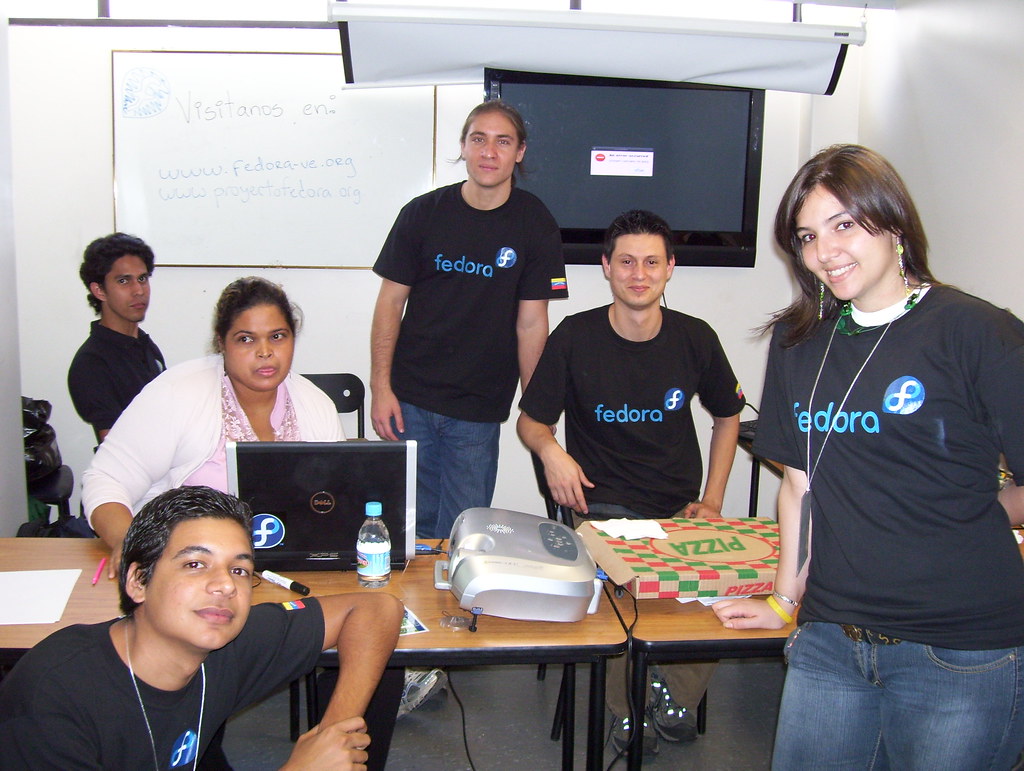
That freedom allowed her to develop her skills, take on new responsibilities, and build relationships with people around the world. Some of those relationships became lifelong friendships. One became something even more significant.
“I ended up marrying one,” she says, laughing about how deeply the community has shaped her life. Her husband is also part of the Fedora community, and many of their closest friends are people they first met through open source.
“My friendships, my relationship, and my career path have been built all around the Fedora community.”
For María, open source has never been simply a professional network. It has become an extended family.
Open source careers: “I haven’t submitted a resume in my life”
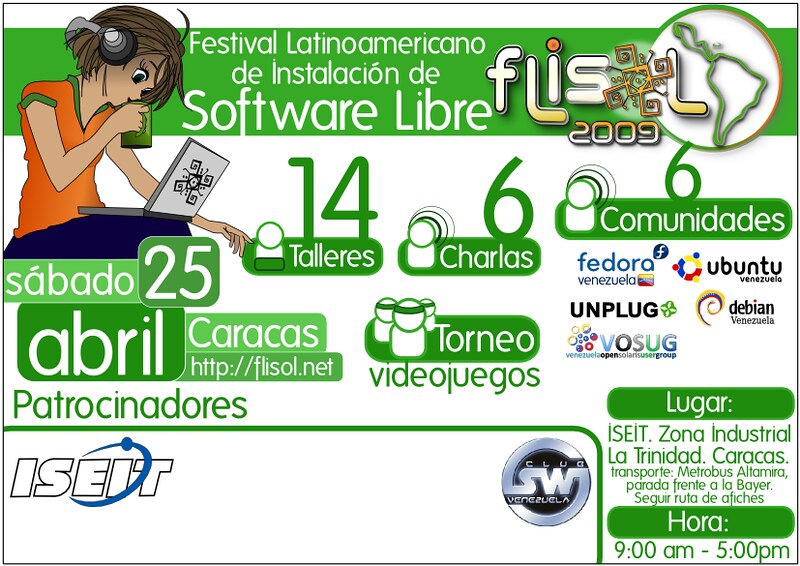
After moving to Caracas in 2006, María joined a Linux training institute, where she worked as head designer and took responsibility for marketing, events, and conferences. She also became involved in organising FLISOL, the Latin American Free Software Installation Festival, helping to bring together people interested in Linux and open source technologies.
Later, she returned to her home region and began working remotely. She spent several years working in photography, using open source tools such as Darktable, and contributing to their Spanish-language documentation.
For more than a decade, she has worked for a Canadian company providing digital services to automotive dealerships. Her employer gives her the freedom to choose her own tools and workflows, as long as she delivers the required results.
Throughout her career, one thing has remained remarkably consistent: her professional opportunities have come through people she knows.
“I haven’t submitted a resume in my life.”
Every job, she explains, has come through personal recommendations and connections established within the open source community. For María, this demonstrates the importance of combining professional competence with the ability to work well with others.
“The human value that you add to a job is as important as the quality of your professionalism.”
She believes that open source offers a particularly valuable starting point for people who have little or no professional experience. Contributions to public projects create a visible record of what someone can actually do, whether that’s writing code, designing graphics, translating documentation, or organising events. Unlike a conventional CV, that work can often be traced through project histories, community discussions, and the people who collaborated on it.
Her advice to newcomers is to start contributing early, even if the work seems small: “There’s no easy way to build a trusted presence on the internet other than actually doing stuff, not just saying that you did it.”
And the connections made along the way may turn out to be just as valuable as the experience itself.
Venezuela and Colombia: Two different open source cultures
María spent most of her early open source career in Venezuela, where she remembers a particularly active and enthusiastic community.
Open source gained visibility in the country relatively early, partly through government initiatives promoting its adoption. But María believes that curiosity and the willingness to experiment were the real driving forces behind the community’s growth.
“People in Venezuela were hungry for knowledge.”
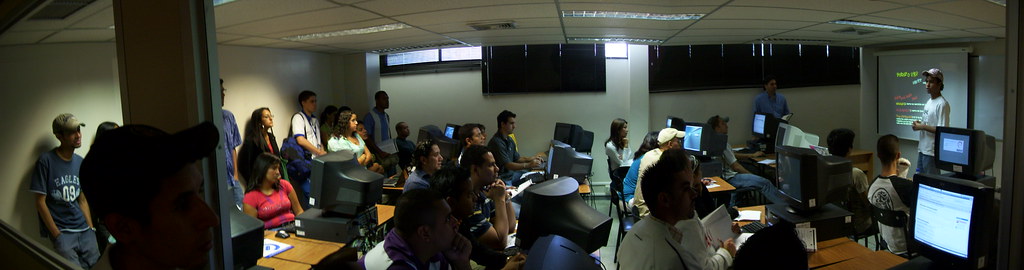
Universities increasingly introduced open source into their teaching, while local communities organised conferences, installation festivals, and workshops. María remembers a FLISOL event in 2011 that attracted more than 3,000 people in a single day.
The Venezuelan community also developed strong international connections, with contributors participating in major projects.
“Every single open source project was related to Venezuela somehow, like Mozilla and Fedora and all of that,” she recalls.
In her experience, the community was particularly active between 2009 and 2014, before the country’s deteriorating conditions made participation increasingly difficult.
Frequent power outages eventually became a major obstacle to her professional work. With electricity sometimes unavailable for between four and twelve hours a day, maintaining a reliable working environment was increasingly challenging.
This was one of the main reasons María and her family decided to move to Colombia. There, she encountered a somewhat different open source culture. While open source technologies are widely used in Colombia, she feels that community participation is more closely associated with professional software development than in Venezuela, where contributing beyond one’s day job was more common.
She is careful to point out that this is based on her personal experience, rather than a comprehensive comparison of the two countries.
Having established most of her community connections in Venezuela, she hasn’t been as deeply involved in building local communities in Colombia. Nevertheless, she continues to participate in events, teach classes, and share her knowledge.
And wherever she goes, she remains interested in learning from the people and cultures around her.
Learning to learn – and working independently
As has become evident, María’s career is a story of self-education.
When she first became involved in open source, the resources she needed were often unavailable in Spanish. Her English wasn’t particularly good either. “Honestly, I failed English in high school,” she admits.
Determined to understand the software she wanted to use, she taught herself the language in less than two years.
The process wasn’t easy. Online resources were limited, and getting help often meant connecting with people through IRC chat channels, sometimes in entirely different time zones.
She remembers many late nights spent waiting for someone on the other side of the world to answer her questions.
Those experiences taught her something that continues to shape her professional approach: the ability to learn independently is one of the most valuable skills anyone can develop.
Today, when hiring people for her own team, she pays particular attention to their willingness to teach themselves new things.
She enjoys mentoring others, but also wants colleagues who challenge established ways of working, explore alternatives, and bring new ideas to the table.
“I love to teach and I love to guide, but I love to be challenged and I love to learn different styles, different ways to do things.”
This mindset has become particularly relevant with the rise of AI. María sees a connection between learning to work with open source tools and developing the reasoning skills needed to use AI effectively. When teaching image editing, for example, she has always focused on explaining the process behind a result rather than simply showing students which button to click.
“I don’t teach where to click. I teach the idea and the reasoning that is behind reaching that result.”
Understanding how something works, she argues, is what enables people to adapt to new technologies rather than depend entirely on them.
Motherhood aka raising the next generation of open source enthusiasts
As María’s professional life evolved, so did her personal priorities. Becoming a mother changed the way she approached her career, particularly when it came to travelling and attending international conferences.
In the past, she regularly travelled abroad to speak at events and meet other community members. Today, she prefers to focus on local activities and remote participation, allowing her to spend more time with her son.
“I chose to be a mom. I don’t regret it. I chose to stay at home with my kid and chose a job that allowed me to have time for it.”
She acknowledges that motherhood can affect women’s professional trajectories in ways that aren’t always recognised. Even with a supportive partner, she explains, mothers often take on responsibilities that influence their availability and career decisions.
For María, the answer has been to find a balance that works for her family rather than follow a predetermined career path.
And open source remains very much part of family life: Her husband is an active community member, and their nine-year-old son is already exploring robotics, 3D printing, and programming. He sometimes accompanies her to local community events, where he has become something of a mascot among her friends. Their home, she laughs, is filled with technology, and their Christmas present one year was a 3D printer.
For María, this is another example of how open source has become intertwined with her personal life, connecting generations as well as people across countries.
“Curiosity is the key to a happy life”
Looking back on more than two decades in open source, María doesn’t define her success through job titles, qualifications, or the number of projects she has contributed to. Instead, she values the relationships she has built, the opportunities she has discovered, and the freedom to keep learning.
She also believes that open source communities continue to offer opportunities for people from all kinds of professional backgrounds. Not everyone needs to be a developer. Projects need designers, translators, photographers, communicators, event organisers, and people who can help make technology accessible to wider audiences. And while the tools and platforms have changed dramatically since she first became involved, the underlying opportunities remain.
Contributing to open source allows people to gain practical experience, demonstrate their abilities, and build relationships that may shape their careers for years to come.
But perhaps the most important lesson María has taken from her journey is a much simpler one.
“Curiosity is the key to a happy life.”
It’s a message she shares at the end of every talk she gives.
“Stay proactive, stay learning, stay reading, stay chatting with people you don’t know in a safe environment, and enjoy the ride.”
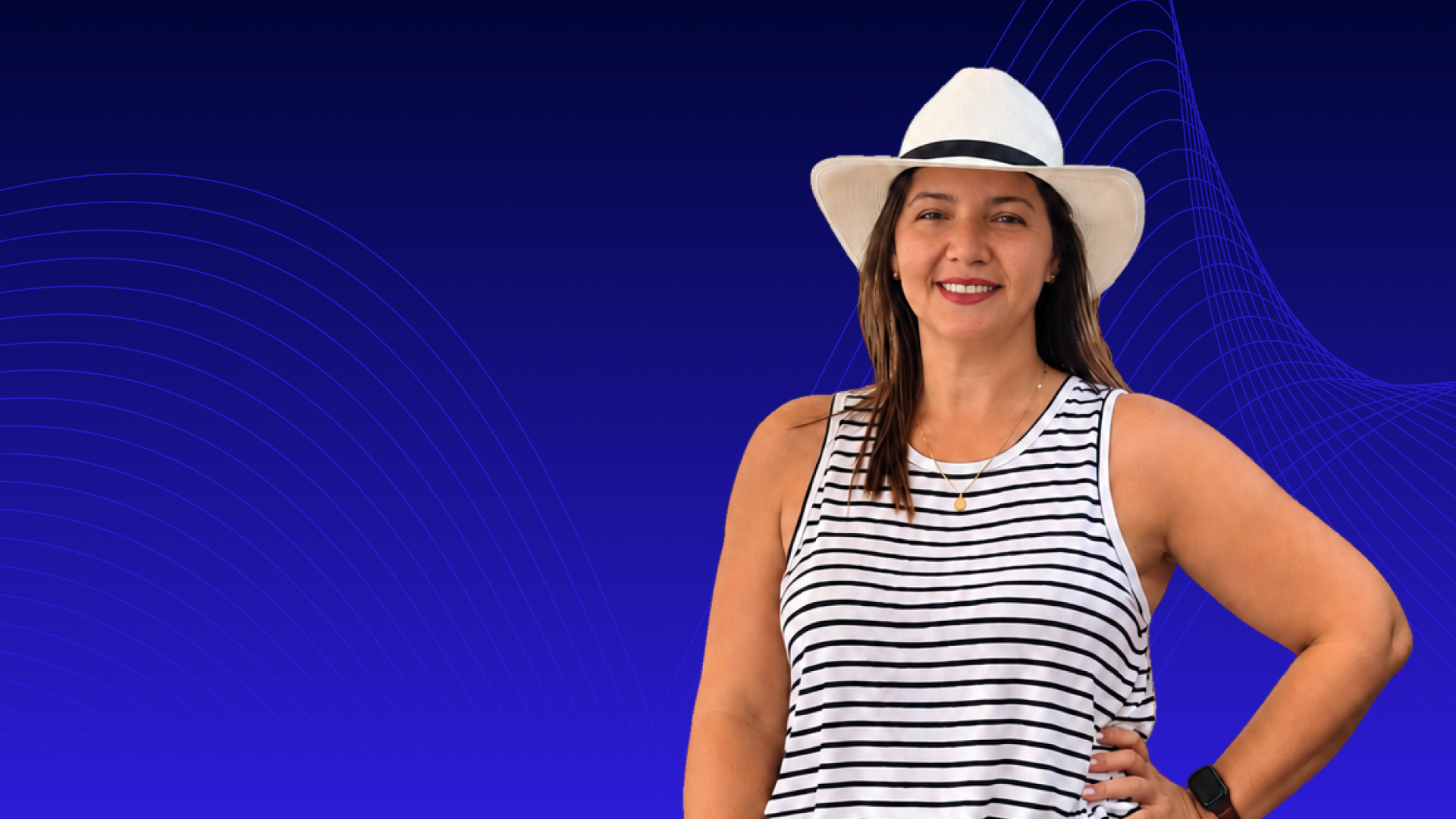
Maria “Tatica” Leandro is a digital designer, open source advocate, and creative technologist whose work sits at the intersection of design, technology, and community. With over twenty years of experience in the digital space, she brings a versatile, analytical approach to user experience (UX/UI), web systems, and brand strategy.
Her journey in technology began in computer programming before evolving into full-spectrum digital design. Throughout her career, Tatica has been a global voice for open source tools. She has organised major regional and international tech conventions, including FLISOL and FUDCon, and frequently presents on topics ranging from design systems to community building. Her ongoing work promotes open design software like Darktable, Inkscape, and GIMP to empower creators worldwide.
In addition to her design practice, Tatica is a published author and hands-on maker. She manages digital publication projects and operates a desktop 3D printing and digital manufacturing setup, turning complex design concepts into physical products and custom solutions.
Whether building digital interfaces, mentoring upcoming creators, or organising community initiatives, Tatica is driven by a commitment to open knowledge, continuous learning, and functional design. Visit her website at https://tatica.org/